
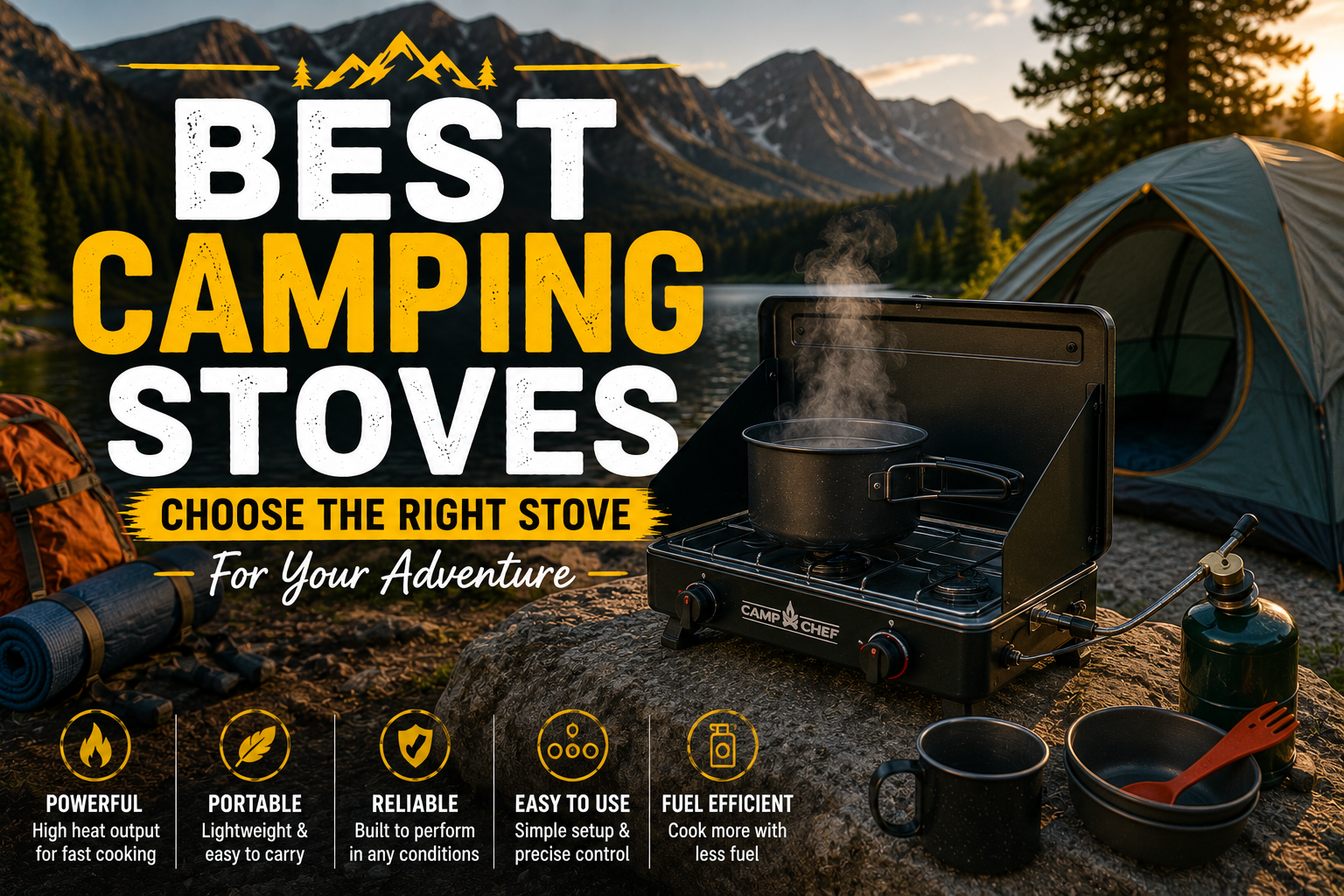
Best Camping Stoves: How to Choose the Right One for Your Trip
Cooking outdoors is one of the best parts of camping.
Whether you’re preparing a quick breakfast in the morning, boiling water for coffee, or cooking dinner after a long day of hiking, having a reliable camping stove can make outdoor cooking much easier.
But choosing one of the best camping stoves isn’t always simple.
There are compact backpacking stoves, portable single-burner stoves, larger two-burner camping stoves, and different fuel systems designed for different environments.
So which one should you choose?
The answer depends on how you camp, how many people you’re cooking for, what meals you prepare, and how much equipment you’re willing to carry.
In this guide, we’ll explain the main types of camping stoves, their advantages and disadvantages, and the features you should consider before buying one.
Quick Answer: The best camping stove depends on your camping style. For car camping and families, a larger two-burner stove can provide convenience and flexibility. For backpacking, a compact lightweight stove is usually a better choice. Beginners should prioritize ease of use, stability, portability, and fuel availability.
Why Do You Need a Camping Stove?
While some campers enjoy cooking over a campfire, a dedicated camping stove offers several advantages.
A camping stove can help you:
- Boil water quickly
- Prepare hot meals
- Make coffee or tea
- Cook breakfast
- Heat canned or packaged food
- Control cooking temperature
- Cook when a campfire isn’t practical
A stove also gives you greater control over your cooking than many traditional campfires.
However, always follow local regulations and the manufacturer’s instructions when using a camping stove outdoors.
Best Camping Stoves by Camping Style
The best stove for you depends on your type of camping.
Best Camping Stove for Beginners
If you’re new to camping, simplicity should be your priority.
Look for a stove that is:
- Easy to set up
- Simple to operate
- Stable
- Easy to clean
- Portable
- Compatible with readily available fuel
You don’t need an extremely powerful or complicated stove for your first camping trips.
A simple portable stove can be enough for preparing basic meals and boiling water.
Best Camping Stoves for Car Camping
Car camping gives you more freedom when choosing camping equipment.
Since you’re transporting your equipment by vehicle, you can choose a larger stove without worrying too much about weight.
For car camping, consider:
- Two burners
- Larger cooking surface
- Wind protection
- Adjustable heat controls
- Sturdy construction
- Easy cleaning
A two-burner stove is particularly useful because you can cook different foods at the same time.
For example, you could prepare eggs on one burner while heating water or cooking another dish on the second.
Best Camping Stoves for Backpacking
Backpacking requires a completely different approach.
When you’re carrying everything in your backpack, weight and size become major considerations.
A backpacking stove should ideally be:
- Lightweight
- Compact
- Easy to pack
- Fuel-efficient
- Simple to operate
Many backpacking stoves are designed primarily for boiling water and preparing simple meals.
If you’re hiking long distances, carrying a large camping stove usually isn’t practical.
Single-Burner vs. Two-Burner Camping Stoves
One of the easiest ways to narrow down your options is to decide how many burners you need.
Single-Burner Camping Stoves
A single-burner stove is compact and relatively easy to transport.
Advantages
- Lightweight
- Compact
- Easy to store
- Simple to use
- Good for solo campers and couples
Disadvantages
- Limited cooking capacity
- Only one pot or pan at a time
- Less convenient for larger meals
A single burner can be an excellent choice for simple camping meals.
Two-Burner Camping Stoves
Two-burner stoves are popular among families and car campers.
Advantages
- Cook multiple foods simultaneously
- More convenient for larger meals
- Better for groups
- More cooking flexibility
Disadvantages
- Larger
- Heavier
- Requires more storage space
If you’re driving directly to your campsite, the additional size can be worth it.
Types of Camping Stove Fuel
Camping stoves use different fuel systems.
Understanding the main options can help you choose the right stove.
Propane Camping Stoves
Propane is widely used for recreational camping.
Advantages
- Convenient
- Easy to use
- Good for car camping
- Simple heat adjustment
- Suitable for larger camping stoves
Propane stoves are especially popular among beginners because they can be straightforward to operate.
Isobutane and Propane-Butane Canisters
Compact canister stoves are popular among backpackers.
They are usually:
- Lightweight
- Compact
- Quick to set up
- Convenient for boiling water
They’re a popular option when portability is more important than having a large cooking surface.
Liquid Fuel Stoves
Liquid-fuel stoves can be useful in certain conditions and are often considered by experienced outdoor enthusiasts.
They can offer advantages in cold environments and remote locations where certain canister fuels may be less convenient.
However, they may require more maintenance and a greater understanding of the equipment.
For beginners, a simple canister or propane stove may be easier to manage.
Wood-Burning Camping Stoves
Wood-burning stoves use small pieces of wood or natural fuel.
Advantages
- No traditional fuel canister required
- Can be useful where natural fuel is available
- Compact options exist
Disadvantages
- Depend on suitable dry fuel
- Can produce smoke
- More affected by weather
- Not permitted everywhere
Always check local regulations before collecting or burning natural materials.
What Makes the Best Camping Stove?
There are several factors to consider before buying.
1. Heat Output
Heat output affects how quickly your stove can boil water and cook food.
Higher output isn’t automatically better.
What matters is whether the stove provides enough power for the type of cooking you actually plan to do.
For simple meals, moderate output may be sufficient.
For larger cooking tasks, more power can be useful.
2. Stability
Stability is extremely important.
A camping stove should provide a solid platform for your cookware.
Look for:
- Stable legs
- Wide pot supports
- Strong construction
- A design appropriate for your cookware
Always place your stove on a stable, level, non-combustible surface as recommended by the manufacturer.
3. Portability
If you’re carrying the stove in a backpack, portability becomes a major priority.
For car camping, you can afford to choose a larger model.
Think about:
Weight + Packed Size + Setup
before making your decision.
4. Fuel Availability
A great stove isn’t very useful if you can’t easily obtain its fuel.
Before buying, consider:
- Where you’ll camp
- How long your trips usually last
- Whether fuel is available near your destinations
- How much fuel you’ll need
For beginners, choosing a fuel system that’s easy to obtain locally can make camping much simpler.
5. Wind Resistance
Wind can significantly affect outdoor cooking.
Strong wind can:
- Reduce heating efficiency
- Increase cooking time
- Make maintaining a flame more difficult
Some camping stoves include built-in wind protection.
For exposed campsites, this feature can be especially useful.
6. Simmer Control
Not every meal requires maximum heat.
Good simmer control allows you to cook foods gently rather than simply heating everything at full power.
This is useful for:
- Sauces
- Eggs
- Rice
- Pasta
- Soups
- Delicate foods
If you plan to prepare more than basic boiled meals, look for a stove with precise heat adjustment.
7. Ease of Cleaning
Outdoor cooking can get messy.
Food spills, grease, and soot can accumulate quickly.
A stove that’s easy to wipe down and maintain will be much more enjoyable to use.
Consider:
- Removable cooking surfaces
- Simple burner designs
- Accessible controls
- Easy-to-clean materials
Best Camping Stove for Family Camping
For family camping, a two-burner stove is often the most practical option.
It allows you to prepare several parts of a meal at once.
For example:
Burner 1: Pasta
Burner 2: Sauce
Or:
Burner 1: Eggs
Burner 2: Coffee or hot water
If you’re camping with several people, cooking capacity can make a noticeable difference.
Best Camping Stove for Solo Campers
Solo campers usually don’t need a large cooking system.
A compact single-burner stove can be enough for:
- Boiling water
- Making coffee
- Cooking noodles
- Preparing simple meals
A smaller stove also takes up less room in your backpack.
Best Camping Stove for Couples
For couples, you have several options.
A compact single-burner stove can work well for simple meals.
If you enjoy cooking more elaborate meals, a two-burner stove may be more convenient.
The right choice depends on whether you prioritize minimal equipment or cooking flexibility.
Best Camping Stove for Coffee
If morning coffee is an essential part of your camping routine, look for a stove that can efficiently heat water.
A compact canister stove can be ideal for backpacking.
For car camping, a larger stove provides more flexibility for preparing breakfast at the same time.
Camping Stove Safety Tips
Camping stoves involve heat and fuel, so safety should always come first.
Use the stove outdoors
Never use a fuel-burning camping stove inside a tent, enclosed vehicle, or other unventilated space because of the risk of carbon monoxide and fire.
Follow the manufacturer’s instructions
Read the instructions before using your stove.
Check connections
If your stove uses a fuel canister or hose, inspect connections before operation.
Keep flammable materials away
Keep tents, dry vegetation, clothing, and other combustible materials away from the cooking area.
Use a stable surface
Set the stove up according to the manufacturer’s instructions on a stable surface.
Never leave the stove unattended
Stay nearby while the stove is operating.
Let it cool
Allow the stove to cool before packing it away.
Common Camping Stove Buying Mistakes
Buying Too Large
A huge stove may be unnecessary for a solo camper.
Buying Too Small
A tiny backpacking stove may become frustrating if you’re preparing meals for a family.
Ignoring Fuel Availability
Make sure you can obtain the appropriate fuel for your trips.
Focusing Only on Power
Maximum heat output isn’t the only factor that matters.
Ignoring Wind
Outdoor cooking conditions can be very different from cooking at home.
Forgetting Cookware Compatibility
Check whether your pots and pans are suitable for the stove.
How Much Should You Spend on a Camping Stove?
Camping stoves are available at different price points.
Budget Camping Stoves
Good for:
- Beginners
- Occasional camping
- Simple meals
- Car camping
Mid-Range Camping Stoves
Often offer a good balance of:
- Durability
- Performance
- Portability
- Features
Premium Camping Stoves
May offer:
- Higher-quality materials
- Better weight-to-performance ratios
- Improved wind resistance
- More precise controls
- Specialized designs
Choose based on how frequently you’ll use the stove rather than simply buying the most expensive option.
How to Choose the Best Camping Stove
Before buying, ask yourself:
How many people will I cook for?
Solo campers need less cooking capacity than families.
Will I drive or hike to the campsite?
Car camping allows larger equipment.
Backpacking requires lightweight gear.
What meals will I prepare?
Simple meals require less equipment than elaborate cooking.
What fuel is available?
Choose a stove with fuel that’s practical for your destinations.
What weather will I encounter?
Wind and cold can influence stove performance.
How important is weight?
For backpacking, weight should be a major consideration.
Camping Stove Buying Checklist
Before purchasing, check:
☐ Appropriate fuel type
☐ Suitable heat output
☐ Stable pot supports
☐ Good wind protection
☐ Easy ignition
☐ Adjustable heat control
☐ Appropriate weight
☐ Compact packed size
☐ Easy cleaning
☐ Compatible cookware
☐ Suitable for your group size
☐ Manufacturer instructions included
How to Maintain Your Camping Stove
Proper maintenance can help your stove perform reliably for years.
Clean it after use
Remove food residue and dirt according to the manufacturer’s instructions.
Inspect the burner
Check for damage or blockages.
Check fuel connections
Inspect hoses, valves, and connection points where applicable.
Store it properly
Keep the stove dry and protected when not in use.
Transport it carefully
Protect the burner and controls from unnecessary impacts.
Always follow the manufacturer’s specific maintenance instructions