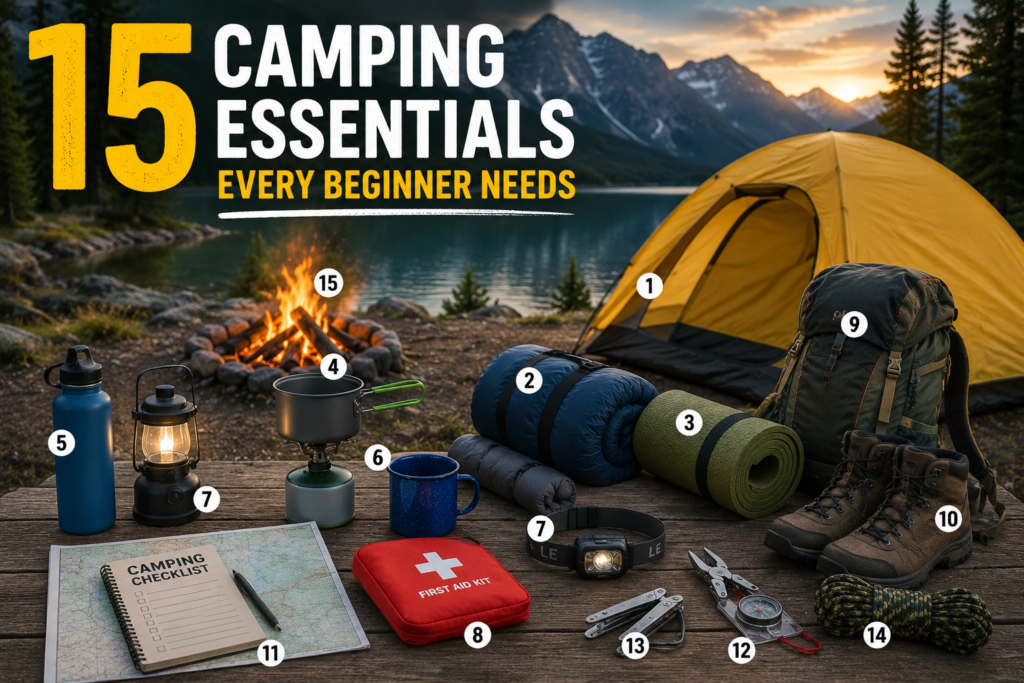
15 Camping Essentials Every Beginner Needs
Planning your first camping trip can be exciting, but knowing what to bring camping can sometimes feel overwhelming.
With so much camping gear available, beginners often end up packing too much—or forgetting something important.
The good news is that you don’t need a huge collection of expensive equipment to enjoy the outdoors. With the right basics, you can stay comfortable, organized, and prepared for changing conditions.
In this guide, we’ll cover 15 camping essentials for beginners that can help make your first camping adventure easier and more enjoyable.
Quick Takeaway: Focus on the essentials first: shelter, sleeping gear, food and water, lighting, clothing, navigation, and safety equipment. You can add specialized gear as you gain more camping experience.
1. A Reliable Tent
Your tent is your home away from home, so choosing the right one should be one of your first priorities.
For most beginners, a 3-season tent is a good starting point. Look for a tent that is easy to set up, provides enough space for everyone, and offers protection from rain and wind.
Don’t choose a tent based only on the number of people it claims to sleep. If you prefer extra room for your gear, consider going one size larger.
Beginner tip: Practice setting up your tent at home before your first camping trip.
2. Sleeping Bag
A good sleeping bag can make the difference between a relaxing night and a very uncomfortable one.
When choosing a sleeping bag, pay attention to its temperature rating and consider the weather conditions where you’ll be camping.
For warmer weather, a lightweight sleeping bag may be enough. For colder conditions, you’ll need a bag designed for lower temperatures.
Always check the expected nighttime temperature before your trip.
3. Sleeping Pad
A sleeping bag alone doesn’t provide all the insulation and comfort you need.
A sleeping pad creates a layer between your body and the ground, helping reduce heat loss while also providing cushioning.
Beginners can choose between:
- Foam sleeping pads
- Self-inflating pads
- Inflatable sleeping pads
If you’re backpacking, weight and packed size become especially important.
4. Camping Stove
A camping stove makes preparing hot meals much easier.
Depending on your camping style, you might choose a compact backpacking stove or a larger camping stove for family trips.
Before using any stove, make sure you understand the manufacturer’s instructions and use it in a safe, well-ventilated outdoor location.
Never use fuel-burning camping equipment inside a tent.
5. Water and Water Storage
Water is one of the most important things to plan before leaving for a camping trip.
Depending on your destination, you may need to bring enough drinking water for the entire trip or use a reliable water treatment method.
Bring sturdy water bottles or a dedicated camping water container.
If you’re camping somewhere without reliable drinking water, research the area beforehand and determine what water treatment method is appropriate.
6. Camping Food
You don’t need complicated meals to enjoy good food while camping.
Simple options include:
- Oatmeal
- Eggs
- Sandwiches
- Pasta
- Rice
- Canned foods
- Trail mix
- Fresh fruit
- Dehydrated meals
Plan your meals before leaving home and bring only what you’ll realistically need.
A simple camping meal planner can make this much easier.
7. Headlamp or Flashlight
Once the sun goes down, a reliable light becomes essential.
A headlamp is particularly useful because it leaves both hands free while you’re cooking, setting up your tent, or walking around camp.
Bring extra batteries or make sure your rechargeable light is fully charged before leaving.
It’s also a good idea to keep a backup light in your camping gear.
8. First Aid Kit
Even on a simple camping trip, small injuries can happen.
A basic first aid kit should be easy to access and include items such as:
- Adhesive bandages
- Gauze
- Medical tape
- Antiseptic supplies
- Tweezers
- Disposable gloves
- Personal medications
- Emergency information
Your kit should match the type and length of your trip.
For remote adventures, you may need additional supplies and appropriate first-aid knowledge.
9. Weather-Appropriate Clothing
The weather can change quickly outdoors, so don’t rely on a single outfit.
A good camping clothing system usually includes:
- Moisture-managing base layers
- Warm insulating layers
- Weather-resistant outer layers
- Comfortable socks
- Appropriate footwear
Avoid relying entirely on cotton in cold or wet conditions because it can stay damp for a long time.
Check the forecast before your trip and pack accordingly.
10. Camping Chair
A camping chair isn’t essential for survival, but it can make your campsite much more comfortable.
After a long day of hiking or exploring, having somewhere comfortable to sit around the campfire can be a welcome luxury.
If you’re car camping, you can choose a larger, more comfortable chair.
For backpacking, however, you’ll probably want to minimize weight and skip it.
11. Camping Cookware
If you plan to cook at your campsite, you’ll need basic cookware.
Depending on your meals, this might include:
- Camping pot
- Pan
- Plate
- Bowl
- Cup
- Spoon or fork
- Knife
- Cooking utensils
You don’t necessarily need a complete kitchen.
Start with a small collection of versatile items and expand your cooking setup as you gain experience.
12. Navigation Tools
Your smartphone can be useful, but you shouldn’t rely on it as your only navigation tool—especially in remote areas where there may be no cellular service.
Depending on your trip, consider bringing:
- A physical map
- Compass
- Offline maps
- GPS device when appropriate
Before heading out, learn the basic route and understand the area you’ll be visiting.
13. Multi-Purpose Tool
A compact multi-purpose tool can be useful for many small campsite tasks.
Depending on the design, it may include tools such as:
- Pliers
- Screwdriver
- Small knife
- Scissors
- Bottle opener
Choose a tool that fits your actual needs instead of carrying unnecessary equipment.
14. Trash Bags
One of the easiest things to forget is something to carry your trash.
Bring several durable trash bags and keep your campsite clean.
A simple rule is:
Pack it in, pack it out.
Never leave food wrappers, cans, plastic, or other waste behind.
Keeping your campsite clean helps protect the environment and reduces the chance of attracting wildlife.
15. Emergency & Safety Gear
Finally, every beginner should have a basic emergency plan.
Depending on your destination and activity, useful items may include:
- Whistle
- Emergency blanket
- Extra food
- Extra water
- Backup light
- Portable power bank
- Communication device
- Emergency contact information
Before leaving, tell someone where you’re going and when you expect to return, particularly when camping in remote areas.
