
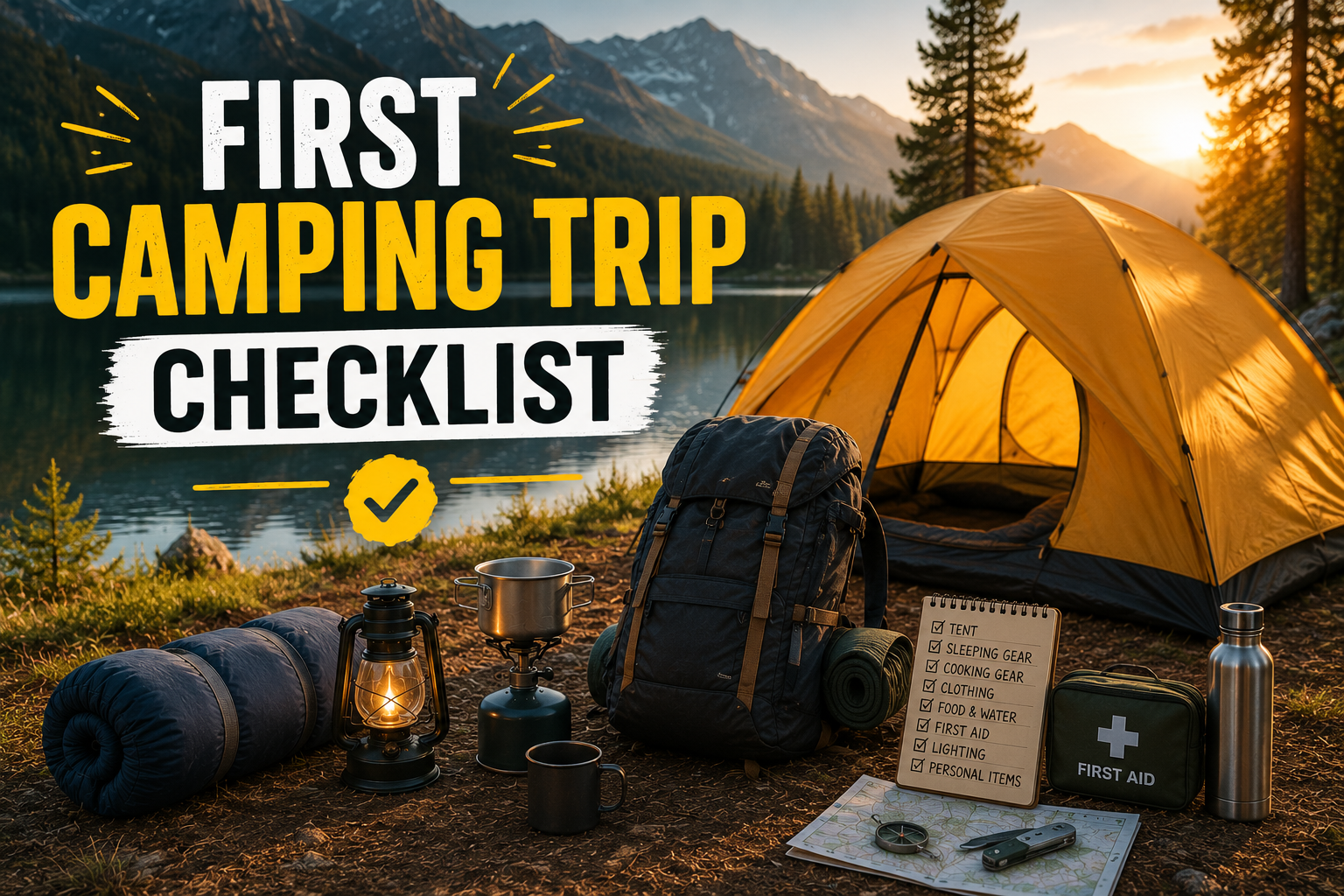
First Camping Trip Checklist: Everything You Need Before You Go
Planning your first camping trip is exciting, but figuring out what to pack can quickly become overwhelming.
What kind of tent do you need? How much food and water should you bring? What clothes are suitable? Do you need a camping stove, a first-aid kit, or a flashlight?
The good news is that you don’t need to own every piece of camping gear available.
For your first adventure, the goal is simple: bring the essentials, prepare for the weather, and avoid unnecessary gear.
This complete first camping trip checklist will help you prepare for your adventure, whether you’re planning a simple overnight stay, a weekend camping trip, or your first family camping experience.
Quick Answer: For your first camping trip, prioritize shelter, sleeping gear, food and water, appropriate clothing, lighting, cooking equipment, personal items, and basic safety gear. Always adjust your packing list based on the destination, weather, trip length, and activities.
First Camping Trip Checklist
Before we look at every category in detail, here’s a quick checklist you can use while packing.
Shelter
- ☐ Tent
- ☐ Tent poles
- ☐ Tent stakes
- ☐ Rainfly
- ☐ Tent footprint
- ☐ Guy lines
Sleeping
- ☐ Sleeping bag
- ☐ Sleeping pad
- ☐ Pillow
- ☐ Extra blanket
Food & Water
- ☐ Drinking water
- ☐ Food
- ☐ Snacks
- ☐ Camping stove
- ☐ Fuel
- ☐ Cooking equipment
Clothing
- ☐ Comfortable clothes
- ☐ Extra socks
- ☐ Warm layer
- ☐ Rain jacket
- ☐ Appropriate footwear
Safety
- ☐ First-aid kit
- ☐ Headlamp
- ☐ Flashlight
- ☐ Navigation tools
- ☐ Emergency supplies
Personal Items
- ☐ Toothbrush
- ☐ Toothpaste
- ☐ Toilet paper
- ☐ Sunscreen
- ☐ Insect repellent
- ☐ Personal medications
Now let’s look at each category in more detail.
1. Choose the Right Campsite
Before packing your gear, know where you’re going.
Your campsite determines what you’ll need to bring.
Research:
- Expected weather
- Available drinking water
- Toilets and bathroom facilities
- Fire regulations
- Campsite rules
- Wildlife considerations
- Cell service
- Nearby roads or emergency services
- Hiking trails and activities
Some established campgrounds have toilets, drinking water, picnic tables, and fire rings.
More remote campsites may require you to bring almost everything yourself.
The more you know about your destination, the easier it is to pack correctly.
2. Tent and Shelter
Your tent is your main protection from the elements.
For a first camping trip, choose a tent that is easy to set up and appropriate for the expected conditions.
Tent checklist
- Tent body
- Tent poles
- Stakes
- Rainfly
- Footprint
- Guy lines
- Tent repair supplies
Don’t forget to check that all components are included before leaving home.
Practice Before Your Trip
If you’re using a tent for the first time, set it up at home.
This is one of the best things a beginner camper can do.
You don’t want your first attempt at assembling your tent to happen after sunset or during a rainstorm.
For a detailed guide, read:
→ How to Set Up a Tent: A Step-by-Step Guide for Beginners
3. Sleeping Gear
A comfortable sleeping setup can make your first camping trip much more enjoyable.
Your basic sleeping system should include:
- Sleeping bag
- Sleeping pad
- Pillow
- Extra blanket if needed
Your sleeping bag should be suitable for the expected nighttime temperatures.
The sleeping pad is also important because it provides cushioning and helps insulate you from the ground.
If you’re car camping, you can choose a thicker and more comfortable sleeping pad because you don’t have to carry it long distances.
4. Food and Water
Food and water should be carefully planned before your trip.
Consider:
- Number of people
- Number of days
- Physical activities
- Weather
- Water availability
- Cooking facilities
Simple camping food ideas
For beginners, simple meals are often easier.
Consider:
- Oatmeal
- Eggs
- Sandwiches
- Pasta
- Rice
- Canned foods
- Fresh fruit
- Trail mix
- Granola bars
- Dehydrated meals
Don’t forget snacks.
Hiking and outdoor activities can increase how much food you need during the day.
Water
Research whether safe drinking water is available at your campsite.
If it isn’t, plan how you’ll carry enough water or use an appropriate water-treatment method.
5. Camping Cooking Equipment
If you’re planning to cook at the campsite, pack the equipment you’ll actually use.
Camping kitchen checklist
- ☐ Camping stove
- ☐ Fuel
- ☐ Lighter or matches
- ☐ Cooking pot
- ☐ Pan
- ☐ Plate
- ☐ Bowl
- ☐ Cup
- ☐ Fork and spoon
- ☐ Knife
- ☐ Cooking utensils
- ☐ Food containers
- ☐ Cooler if needed
- ☐ Trash bags
You don’t need to bring your entire kitchen.
Choose versatile equipment that can be used for several meals.
Important: Follow the manufacturer’s instructions for your stove and fuel. Never use fuel-burning cooking equipment inside a tent.
6. Clothing for Your First Camping Trip
Weather can change quickly outdoors.
Your clothing should be based on the forecast and the activities you plan to do.
Clothing checklist
- T-shirts
- Long-sleeve shirts
- Comfortable pants
- Shorts
- Underwear
- Extra socks
- Warm layer
- Rain jacket
- Hat
- Appropriate footwear
- Sleepwear
Don’t Forget Extra Socks
Extra socks are one of the simplest but most useful things to pack.
If your feet get wet, having a dry pair can make a huge difference.
For cold or wet conditions, choose clothing appropriate for the environment rather than relying on a single layer.
7. Headlamp and Flashlight
Once the sun goes down, you’ll need reliable lighting.
A headlamp is particularly useful because it keeps both hands free.
Bring:
- Headlamp
- Flashlight
- Lantern
- Extra batteries
- Backup light
Don’t depend entirely on your smartphone flashlight.
A dedicated light is more practical around the campsite.
8. First-Aid Kit
A basic first-aid kit should always be part of your beginner camping checklist.
It can help with common minor problems such as cuts, scrapes, blisters, or insect bites.
Basic first-aid supplies
- Adhesive bandages
- Gauze
- Medical tape
- Antiseptic supplies
- Tweezers
- Disposable gloves
- Blister treatment
- Personal medications
The contents should match your trip and the activities you’ll be doing.
For remote camping, more comprehensive preparation may be appropriate.
9. Personal Hygiene
You don’t need to bring your entire bathroom.
Pack only the essentials.
Personal hygiene checklist
- Toothbrush
- Toothpaste
- Soap
- Toilet paper
- Hand sanitizer
- Wet wipes
- Quick-dry towel
- Sunscreen
- Insect repellent
- Personal toiletries
Always follow the rules of your campground regarding waste and washing.
10. Weather Protection
One of the biggest mistakes beginners make is preparing only for perfect weather.
Even if the forecast looks good, it’s smart to have basic protection available.
Pack:
- Rain jacket
- Waterproof bags
- Extra clothing
- Warm layer
- Hat
- Sunscreen
- Sunglasses
- Appropriate footwear
If you’re camping in cold weather, your clothing and sleeping equipment should be suitable for the expected nighttime temperatures.
11. Navigation and Communication
Your smartphone can be extremely useful, but it shouldn’t necessarily be your only navigation tool.
Depending on your destination, consider carrying:
- Physical map
- Compass
- Offline maps
- GPS device when appropriate
- Fully charged phone
- Power bank
Before leaving, understand your route and know where you are going.
If you’re camping in a remote area, let someone know your plans and expected return time.
12. Camping Chair and Comfort Items
Some camping equipment isn’t essential, but it can make your trip much more comfortable.
For car camping, you may want:
- Camping chair
- Camping table
- Hammock
- Outdoor blanket
- Camping pillow
- Storage containers
If you’re backpacking, however, consider leaving bulky comfort items behind.
13. Electronics and Power
Technology isn’t necessary for enjoying nature, but some devices can be useful.
Consider bringing:
- Smartphone
- Power bank
- Charging cable
- Camera
- GPS device if needed
- Spare batteries
Fully charge your devices before leaving home.
If you’re going somewhere remote, don’t rely entirely on your phone for emergency communication.
14. Fire and Campfire Supplies
If campfires are permitted at your destination, check the local rules before bringing fire-starting supplies.
Depending on the location and regulations, you may use:
- Lighter
- Waterproof matches
- Fire starter
Never assume that campfires are allowed.
During dry or high-risk conditions, fire restrictions may apply.
Always follow the rules of the campground or public land you’re visiting.
15. Trash and Cleaning Supplies
Responsible camping means leaving your campsite clean.
Bring enough bags for your trash and food waste.
Cleaning checklist
- Trash bags
- Food storage bags
- Paper towels
- Cleaning cloth
- Dishwashing supplies
- Hand sanitizer
Remember:
Pack it in. Pack it out.
Never leave garbage, food scraps, or other waste behind.
16. Emergency Gear
For a beginner-friendly campground close to civilization, you may only need basic emergency supplies.
For more remote adventures, consider additional equipment such as:
- Emergency blanket
- Whistle
- Extra food
- Extra water
- Backup lighting
- Basic repair supplies
- Emergency communication equipment when appropriate
Your emergency preparation should reflect how remote your destination is.
First Camping Trip Checklist for One Night
If you’re camping for only one night, you can keep your packing list relatively simple.
Shelter
☐ Tent
☐ Rainfly
☐ Stakes
☐ Footprint
Sleeping
☐ Sleeping bag
☐ Sleeping pad
☐ Pillow
Food
☐ Dinner
☐ Breakfast
☐ Snacks
☐ Water
☐ Cooking equipment
Clothing
☐ Comfortable clothes
☐ Warm layer
☐ Rain jacket
☐ Extra socks
Safety
☐ First-aid kit
☐ Headlamp
☐ Flashlight
☐ Phone
☐ Power bank
Personal
☐ Toothbrush
☐ Toothpaste
☐ Toilet paper
☐ Sunscreen
☐ Insect repellent