
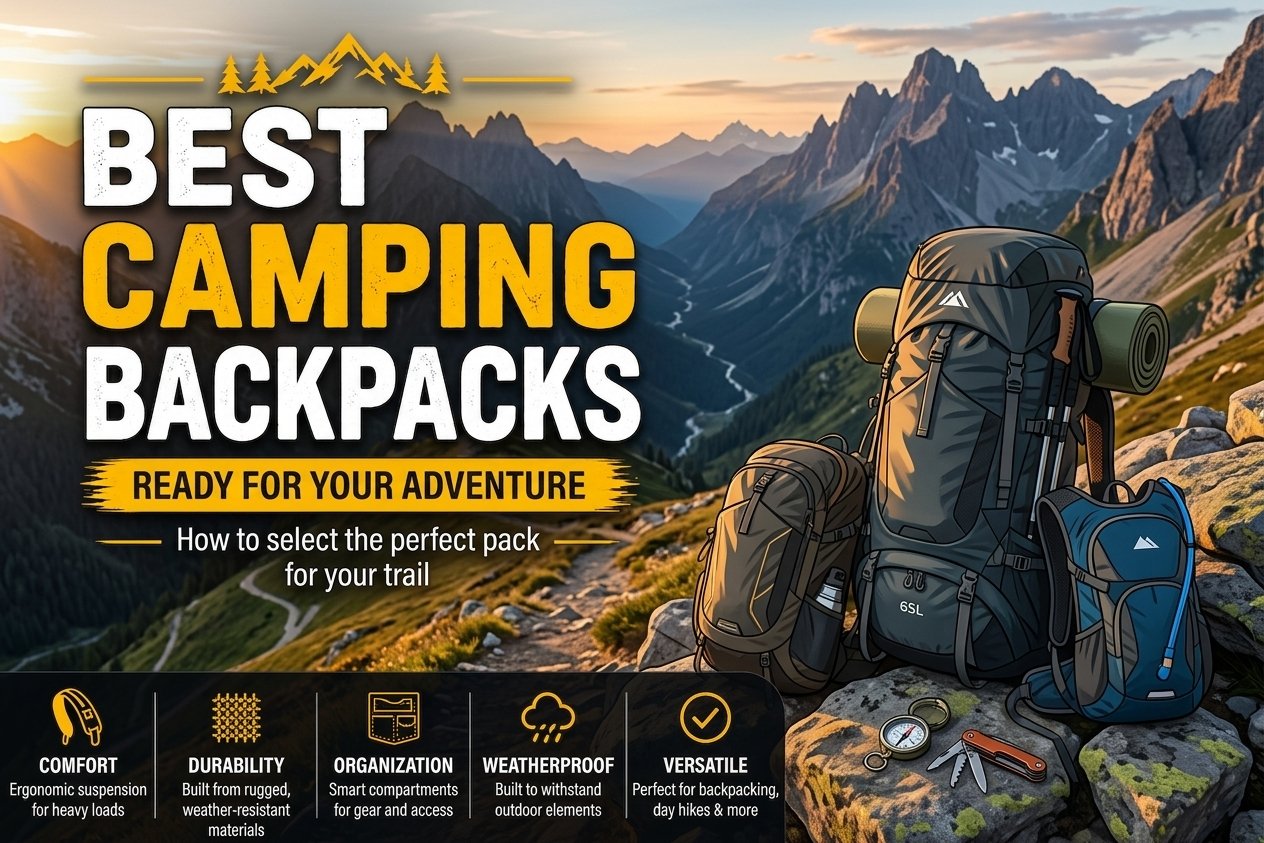
Best Camping Backpacks: How to Choose the Right Backpack for Your Adventure
A good backpack is one of the most important pieces of gear for camping and backpacking.
Whether you’re heading out for a short overnight trip, a weekend adventure, or a multi-day backpacking journey, the right backpack can make carrying your gear much more comfortable.
The wrong backpack, on the other hand, can quickly become uncomfortable when you’re carrying food, water, clothing, camping equipment, and other essentials.
That’s why choosing one of the best camping backpacks should be based on more than appearance or price.
You need to consider the backpack’s capacity, weight, comfort, fit, durability, organization, ventilation, and the type of camping you plan to do.
In this guide, we’ll explain everything you need to know before choosing a camping backpack and help you understand which features actually matter.
Quick Answer: The best camping backpack is one that fits your body properly, has enough capacity for your gear, distributes weight comfortably, and matches your camping style. Day trips require smaller packs, while overnight and multi-day trips usually need larger backpacks.
Why Is a Good Camping Backpack Important?
When you’re camping or backpacking, your backpack carries almost everything you need.
Depending on the trip, that may include:
- Tent
- Sleeping bag
- Sleeping pad
- Clothing
- Food
- Water
- Cooking equipment
- Camping stove
- First-aid supplies
- Flashlight or headlamp
- Personal items
A well-designed backpack helps distribute this weight across your body instead of placing excessive pressure on your shoulders.
A comfortable backpack can make a long hiking day much easier.
Best Camping Backpacks by Trip Length
One of the easiest ways to choose a backpack is to consider how long you’ll be camping.
Best Backpacks for Day Camping and Hiking
For a day trip, you don’t need a huge backpack.
A smaller hiking backpack can carry:
- Water
- Snacks
- Extra clothing
- First-aid supplies
- Rain jacket
- Navigation equipment
- Personal items
A compact backpack is usually lighter and easier to carry.
Best Camping Backpacks for Overnight Trips
An overnight camping trip requires more equipment.
You’ll typically need space for:
- Sleeping bag
- Tent
- Food
- Water
- Clothing
- Cooking equipment
- Personal items
A medium-sized backpack can provide a good balance between capacity and portability.
The exact capacity you need depends on how compact your gear is and how much equipment you normally carry.
Best Camping Backpacks for Weekend Trips
Weekend trips require additional food, clothing, and camping supplies.
A larger backpack can provide the additional storage space needed for a two- or three-day adventure.
However, avoid choosing a backpack that’s significantly larger than necessary.
Extra space can encourage you to pack unnecessary equipment, increasing the overall weight of your backpack.
Best Camping Backpacks for Multi-Day Backpacking
Multi-day backpacking trips require careful planning.
You’ll need space for:
- More food
- More clothing
- Larger water supplies
- Cooking equipment
- Shelter
- Sleeping gear
- Navigation equipment
- Personal items
A larger backpack may be necessary, but comfort becomes even more important as the load increases.
For long-distance trips, pay particular attention to the hip belt, shoulder straps, back support, and overall fit.
How Much Backpack Capacity Do You Need?
Backpack capacity is usually measured in liters.
The right size depends on your trip length and the size of your gear.
A general guide is:
| Backpack Size | Typical Use |
|---|---|
| 15–25L | Day hikes |
| 25–40L | Day trips / light overnight |
| 40–55L | Weekend camping |
| 55–70L | Multi-day trips |
| 70L+ | Extended trips / heavy loads |
These ranges are only general guidelines.
A camper with lightweight equipment may need much less space than someone carrying traditional bulky gear.
What Makes the Best Camping Backpack?
Several features determine whether a backpack will actually be comfortable and useful outdoors.
1. Proper Fit
Fit is arguably more important than the brand or number of pockets.
A backpack should fit your torso properly and sit comfortably on your hips and shoulders.
A poorly fitted backpack can cause:
- Shoulder discomfort
- Back strain
- Pressure points
- Reduced mobility
- Fatigue
Whenever possible, adjust the backpack before buying it and make sure the straps can be properly fitted to your body.
2. Comfortable Hip Belt
The hip belt is especially important for larger backpacks.
It helps transfer some of the backpack’s weight from your shoulders to your hips.
A good hip belt should:
- Fit securely
- Feel comfortable
- Stay in place
- Match your body size
For heavy loads, a supportive hip belt can make a significant difference.
3. Shoulder Straps
Look for padded and adjustable shoulder straps.
They should sit comfortably without digging into your shoulders.
The straps should also allow you to adjust the backpack according to your body shape and load.
4. Backpack Weight
The backpack itself contributes to your total carrying weight.
A lightweight backpack can be beneficial, particularly for long-distance hiking.
However, there’s usually a balance between:
Low Weight + Durability + Comfort + Features
An extremely lightweight backpack isn’t necessarily the best choice if it sacrifices comfort or durability.
5. Durability
Camping backpacks are exposed to demanding conditions.
They may encounter:
- Rain
- Dirt
- Rocks
- Branches
- Sand
- Frequent transportation
- Heavy loads
Look for durable materials and strong stitching, particularly around high-stress areas.
6. Water Resistance
Weather can change quickly when you’re outdoors.
A water-resistant backpack can help protect your equipment from light rain.
Some backpacks include rain covers, while others require a separate waterproof cover.
For important items such as electronics, clothing, and sleeping equipment, consider using waterproof dry bags or internal protection rather than relying solely on the backpack fabric.
7. Ventilation
Carrying a backpack for several hours can make your back hot and sweaty.
Some backpacks include ventilation systems designed to improve airflow between your back and the pack.
This can be particularly useful when hiking in warm weather.
8. Multiple Compartments
Organization is another important feature.
Useful compartments can help separate:
- Clothing
- Food
- Water
- Cooking equipment
- Electronics
- Small accessories
However, having too many pockets isn’t necessarily better.
A simple organization system can sometimes make it easier to find your equipment.
Internal Frame vs. External Frame Backpacks
Most modern hiking and camping backpacks use an internal frame.
Internal Frame
Internal-frame backpacks:
- Sit close to your body
- Offer good balance
- Are suitable for hiking
- Usually provide good mobility
They are the most common option for modern backpacking.
External Frame
External-frame backpacks are less common today.
They can provide good load support but tend to be larger and less streamlined.
For most beginners, an internal-frame backpack is a practical choice.
Top-Loading vs. Front-Loading Backpacks
Another difference is how you access your equipment.
Top-Loading Backpacks
These are commonly used for backpacking.
They can be lightweight and provide good storage capacity.
However, reaching items at the bottom can be inconvenient.
Front-Loading Backpacks
Front-loading designs provide easier access to your equipment.
You can open a larger section of the backpack without removing everything from the top.
For campers who value organization and accessibility, this can be a useful feature.
Best Camping Backpacks for Beginners
If you’re buying your first camping backpack, don’t overcomplicate things.
Focus on:
- Correct fit
- Appropriate capacity
- Comfortable shoulder straps
- Supportive hip belt
- Durable materials
- Useful compartments
- Reasonable weight
You don’t need every advanced feature available.
A simple, well-fitting backpack is usually better than a feature-packed backpack that doesn’t fit properly.
Best Lightweight Camping Backpacks
Lightweight backpacks are particularly useful for hikers and backpackers who need to carry their equipment over long distances.
When choosing a lightweight backpack, consider the entire system.
There’s little benefit in saving a few hundred grams on your backpack if the rest of your equipment is extremely heavy.
A lightweight backpack works best when combined with a lightweight camping setup.
Best Camping Backpacks for Car Camping
If you’re car camping, you may not need a large technical backpack at all.
A medium-sized backpack can be useful for:
- Short hikes
- Carrying personal items
- Day trips
- Exploring around the campsite
Since your vehicle carries the majority of your camping equipment, portability doesn’t need to be your only priority.
Best Camping Backpacks for Hiking
For hiking and backpacking, comfort becomes extremely important.
Look for:
- Adjustable torso length
- Padded shoulder straps
- Supportive hip belt
- Breathable back panel
- Lightweight construction
- Water bottle pockets
- Easy-access compartments
The backpack should allow you to move naturally without constantly shifting or bouncing.
Backpack Organization: What Goes Where?
Proper organization can make your camping trip much easier.
A useful system is to keep heavier equipment close to your back and around the middle of the backpack.
Frequently used items can go in easily accessible pockets.
For example:
Bottom
Sleeping bag and items you won’t need immediately.
Middle
Tent, cooking equipment, and other heavier items.
Top
Clothing and equipment you’ll need during the day.
External Pockets
Water bottles, snacks, maps, and small accessories.
Always adjust your packing strategy based on the backpack manufacturer’s recommendations and your own comfort.
How to Pack a Camping Backpack
Packing correctly can improve comfort.
Step 1: Prepare Everything
Lay out everything you plan to take.
Step 2: Remove Unnecessary Items
Ask yourself whether each item is actually necessary.
Step 3: Place Heavy Items Correctly
Keep heavier equipment close to your back and centered.
Step 4: Protect Important Gear
Use waterproof bags for items that must stay dry.
Step 5: Keep Essentials Accessible
Place snacks, water, maps, rain gear, and other frequently used items where you can reach them easily.
Common Camping Backpack Buying Mistakes
Choosing the Wrong Size
A backpack that’s too small can force you to leave essential equipment behind.
A backpack that’s too large can encourage unnecessary packing.
Ignoring Fit
A backpack can have excellent features and still be uncomfortable if it doesn’t fit your body.
Buying Based Only on Price
The cheapest option isn’t always the best value.
Choosing Features Over Comfort
A dozen pockets don’t matter if the backpack hurts your shoulders.
Carrying Too Much
The best backpack can’t solve an overloaded pack.
Pack according to the trip rather than filling every available space.
How Much Should You Spend on a Camping Backpack?
Camping backpacks are available across a wide range of prices.
Budget Backpacks
Suitable for:
- Beginners
- Occasional camping
- Short hikes
- Casual outdoor use
Mid-Range Backpacks
Often provide a good balance of:
- Comfort
- Durability
- Features
- Weight
- Price
Premium Backpacks
May offer:
- Advanced suspension systems
- Lighter materials
- Better ventilation
- Improved adjustability
- Premium construction
Your ideal budget depends on how frequently you plan to use the backpack.
If you’re hiking regularly, investing in a comfortable, durable backpack can be worthwhile.
How to Choose the Best Camping Backpack
Before buying, ask yourself these questions:
How long will my trips be?
This helps determine the required capacity.
How much gear do I normally carry?
Consider your tent, sleeping system, cooking equipment, food, and clothing.
How far will I hike?
Longer distances make weight and comfort more important.
Does the backpack fit me?
Try it on and adjust the straps.
Is the capacity appropriate?
Avoid buying much more capacity than you actually need.
Will I be camping in wet conditions?
If yes, consider water resistance and rain protection