
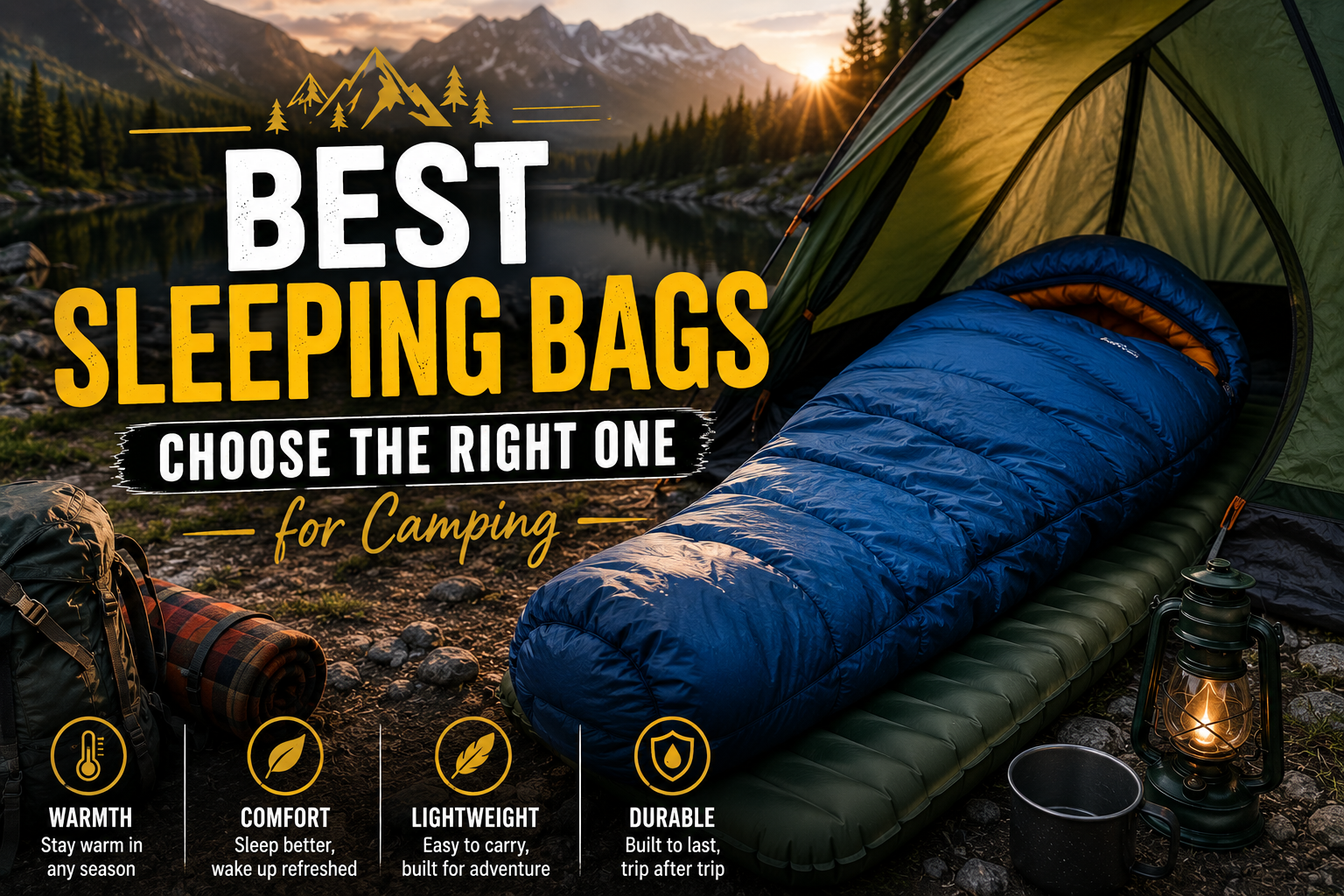
A good night’s sleep can make or break a camping trip.
After spending the day hiking, exploring, fishing, or relaxing outdoors, you want to get into your tent and stay warm and comfortable throughout the night.
That’s why choosing one of the best sleeping bags for your needs is so important.
But finding the right sleeping bag isn’t simply about choosing the warmest or most expensive option.
Sleeping bags come in different shapes, sizes, temperature ratings, insulation types, weights, and price ranges. The right choice depends on where, when, and how you camp.
In this guide, we’ll explain everything you need to know about choosing the right sleeping bag for camping, from temperature ratings and insulation to weight, shape, comfort, and maintenance.
Quick Answer: The best sleeping bag is one that matches the temperatures and conditions you’ll actually encounter. For most recreational campers, a sleeping bag with an appropriate 3-season temperature rating, comfortable insulation, a good fit, and a durable design is a practical choice.
Why a Good Sleeping Bag Matters
Your sleeping bag is an important part of your camping sleep system.
It helps:
- Keep you warm
- Provide comfort
- Protect you from cool nighttime temperatures
- Reduce heat loss
- Make sleeping outdoors more enjoyable
However, a sleeping bag doesn’t work alone.
Your sleeping pad is also important because it provides insulation between your body and the cold ground.
This means that even the best sleeping bag may feel cold if you’re sleeping directly on the ground without adequate insulation.
Best Sleeping Bags by Camping Style
There isn’t one sleeping bag that’s perfect for everyone.
Your camping style should influence your choice.
Best Sleeping Bags for Beginners
If you’re new to camping, prioritize simplicity and versatility.
Look for:
- Comfortable design
- Appropriate temperature rating
- Durable materials
- Easy maintenance
- Reasonable packed size
- Good value
For occasional car camping, weight doesn’t have to be your biggest concern.
Comfort and warmth may matter more.
Best Sleeping Bags for Car Camping
Car camping gives you more freedom when choosing your sleeping gear.
Since you’re transporting your equipment by vehicle, you can choose a sleeping bag that is:
- Larger
- Heavier
- More comfortable
- More spacious
- Better suited for your expected temperatures
A roomy sleeping bag can be especially comfortable for people who don’t like restrictive sleeping positions.
Best Sleeping Bags for Backpacking
When you’re backpacking, every extra ounce matters.
A backpacking sleeping bag should generally provide a good balance between:
Warmth + Weight + Packability
Look for:
- Lightweight insulation
- Compact packed size
- Efficient design
- Appropriate temperature rating
- Durable construction
Premium lightweight sleeping bags can cost more, but reducing weight can make a significant difference during long hikes.
Understanding Sleeping Bag Temperature Ratings
Temperature rating is one of the most important things to understand before buying a sleeping bag.
You’ll commonly see ratings such as:
- Summer
- 3-season
- Winter
You may also see specific temperature ratings listed by the manufacturer.
Summer Sleeping Bags
Designed for warmer conditions.
They are generally lighter and less insulated.
They’re suitable when nighttime temperatures are expected to remain relatively warm.
3-Season Sleeping Bags
These are designed for a broader range of conditions.
They are popular with campers because they can be used during spring, summer, and fall in many environments.
For many recreational campers, a good 3-season sleeping bag is a versatile choice.
Winter Sleeping Bags
Winter sleeping bags are designed for much colder conditions.
They generally contain more insulation and are often heavier and bulkier.
They are intended for campers who regularly camp in cold or winter environments.
Comfort Rating vs. Lower Temperature Rating
When comparing sleeping bags, you may see different temperature numbers.
It’s important to understand that these numbers don’t necessarily mean you’ll feel comfortable at the lowest listed temperature.
Manufacturers may provide different ratings, such as:
- Comfort rating
- Limit rating
- Extreme rating
The comfort rating is particularly useful when deciding what conditions the bag is designed to feel comfortable in.
Always read the manufacturer’s explanation of the rating system before making a purchase.
Down vs. Synthetic Sleeping Bags
One of the biggest decisions you’ll make is choosing between down insulation and synthetic insulation.
Down Sleeping Bags
Down insulation comes from natural bird feathers.
Advantages
- Excellent warmth-to-weight ratio
- Highly compressible
- Lightweight
- Long-lasting when properly maintained
Disadvantages
- Often more expensive
- Performance can suffer when wet
- Requires more careful maintenance
Down is especially popular among backpackers and campers who prioritize low weight and compact size.
Synthetic Sleeping Bags
Synthetic insulation uses manufactured fibers.
Advantages
- Usually more affordable
- Performs better than untreated down when damp
- Easier to maintain
- Often dries faster
Disadvantages
- Usually heavier than comparable down bags
- Generally less compressible
- May take up more space
Synthetic sleeping bags are an excellent choice for beginners and campers who want good value and practical performance.
Which Is Better: Down or Synthetic?
Neither is automatically better.
Choose down if:
- Weight is important
- Pack size matters
- You’re backpacking
- You camp in relatively dry conditions
- You’re comfortable spending more
Choose synthetic if:
- You’re on a budget
- You expect damp conditions
- You’re car camping
- You want easy maintenance
- Weight isn’t your biggest concern
Sleeping Bag Shapes Explained
Sleeping bags come in several different shapes.
The shape affects warmth, comfort, and weight.
Mummy Sleeping Bags
Mummy bags are narrower around the feet and wider around the shoulders.
Benefits
- Excellent warmth efficiency
- Less empty space to heat
- Often lighter
- Popular for backpacking
Drawbacks
- Can feel restrictive
- Less comfortable for people who move around while sleeping
Rectangular Sleeping Bags
Rectangular sleeping bags provide more interior space.
Benefits
- Very comfortable
- More freedom to move
- Great for car camping
- Good for casual camping
Drawbacks
- Usually heavier
- Less thermally efficient
- Larger packed size
If comfort is your priority, a rectangular sleeping bag can be an excellent option.
Semi-Rectangular Sleeping Bags
These offer a compromise between mummy and rectangular designs.
They provide:
- More space than mummy bags
- Better warmth efficiency than traditional rectangular bags
- A versatile design
They’re worth considering if you want a balance between comfort and warmth.
How to Choose the Right Sleeping Bag Size
Sleeping bags aren’t one-size-fits-all.
A bag that’s too large can have excessive empty space, which may reduce warmth efficiency.
A bag that’s too small can be uncomfortable and restrict movement.
Consider:
- Your height
- Shoulder width
- Sleeping position
- Clothing you’ll wear inside the bag
- Personal preference
Many manufacturers offer different lengths and sizes.
Always check the manufacturer’s sizing chart.
Sleeping Bag Features Worth Considering
Not every feature is essential, but some can improve comfort.
Hood
A hood helps retain warmth around your head in colder conditions.
Draft Collar
A draft collar can help reduce heat escaping around the neck and shoulders.
Draft Tube
A draft tube along the zipper can reduce cold air entering through the zipper area.
Two-Way Zipper
Useful for ventilation and easier access.
Foot Box
A shaped foot area can improve comfort and warmth.
Internal Pocket
Useful for keeping small personal items close to you.
What Temperature Rating Should You Choose?
This depends on when and where you’ll camp.
For example:
Warm Summer Camping
A lightweight summer sleeping bag may be enough.
Spring and Fall
A 3-season sleeping bag provides more versatility.
Cold Weather
Choose a sleeping bag specifically designed for the temperatures you expect.
Winter Camping
Use equipment specifically designed for winter conditions rather than relying on a standard camping sleeping bag.
Always consider the expected nighttime temperature, not just the daytime forecast.
Don’t Forget Your Sleeping Pad
A sleeping bag alone isn’t enough for a comfortable night outdoors.
A sleeping pad provides:
- Cushioning
- Insulation
- Protection from the ground
- Additional comfort
The ground can draw heat away from your body, so a good sleeping pad can significantly improve your sleeping system.
Think of your setup as:
Sleeping Bag + Sleeping Pad + Tent = Better Night Outdoors
Best Sleeping Bag for Summer Camping
For warm-weather camping, look for:
- Lightweight insulation
- Breathable materials
- Good ventilation
- Compact design
- Lower temperature rating appropriate for the forecast
A heavily insulated winter sleeping bag can be uncomfortable in hot weather.
Choose equipment for the conditions you’ll actually encounter.
Best Sleeping Bag for Cold Weather Camping
Cold-weather camping requires more preparation.
Look for:
- Appropriate cold-weather temperature rating
- Efficient insulation
- Hood
- Draft collar
- Draft tube
- Proper fit
Also consider your sleeping pad and clothing.
A sleeping bag shouldn’t be expected to compensate for an inadequate sleeping system.
Best Sleeping Bag for Backpacking
If you’re carrying your sleeping bag for miles, focus on:
Weight
Lighter is generally better when you’re carrying everything.
Packed Size
A highly compressible bag can save valuable space.
Warmth
Don’t sacrifice appropriate warmth simply to save weight.
Durability
A lightweight sleeping bag still needs to withstand regular use.
Best Sleeping Bag for Family Camping
For family camping, comfort and practicality often matter more than minimizing weight.
Consider:
- Spacious design
- Easy cleaning
- Durable materials
- Comfortable insulation
- Suitable temperature rating
For children, always choose appropriately sized sleeping equipment rather than simply using an oversized adult sleeping bag.
How Much Should You Spend on a Sleeping Bag?
Sleeping bags are available at many price points.
Budget Sleeping Bags
Good for:
- Occasional camping
- Warm-weather trips
- Beginners
- Car camping
Mid-Range Sleeping Bags
Often provide a good balance between:
- Price
- Comfort
- Durability
- Performance
Premium Sleeping Bags
Usually target campers who prioritize:
- Lightweight construction
- High-quality insulation
- Extreme packability
- Specialized performance
The most expensive sleeping bag isn’t necessarily the best choice for your needs.
Common Sleeping Bag Buying Mistakes
Choosing the Wrong Temperature Rating
This is one of the biggest mistakes.
Always consider the expected nighttime temperature.
Buying Only Based on Weight
A very lightweight sleeping bag isn’t useful if it isn’t warm enough.
Ignoring Your Sleeping Style
A narrow mummy bag may not be comfortable for everyone.
Buying the Wrong Size
A poor fit can affect both comfort and warmth.
Forgetting the Sleeping Pad
Your sleeping bag isn’t the entire sleep system.
Not Considering Moisture
Wet conditions can affect insulation performance, particularly with down.
How to Care for Your Sleeping Bag
Proper care can extend the life of your sleeping bag.
Keep it dry
Moisture can reduce insulation performance.
Air it out
After camping, allow your sleeping bag to air out according to the manufacturer’s care instructions.
Don’t store it compressed long-term
Long-term compression can affect some insulation materials.
Follow the manufacturer’s recommended storage method.
Clean it correctly
Always follow the manufacturer’s washing and drying instructions.
Different insulation types require different care