
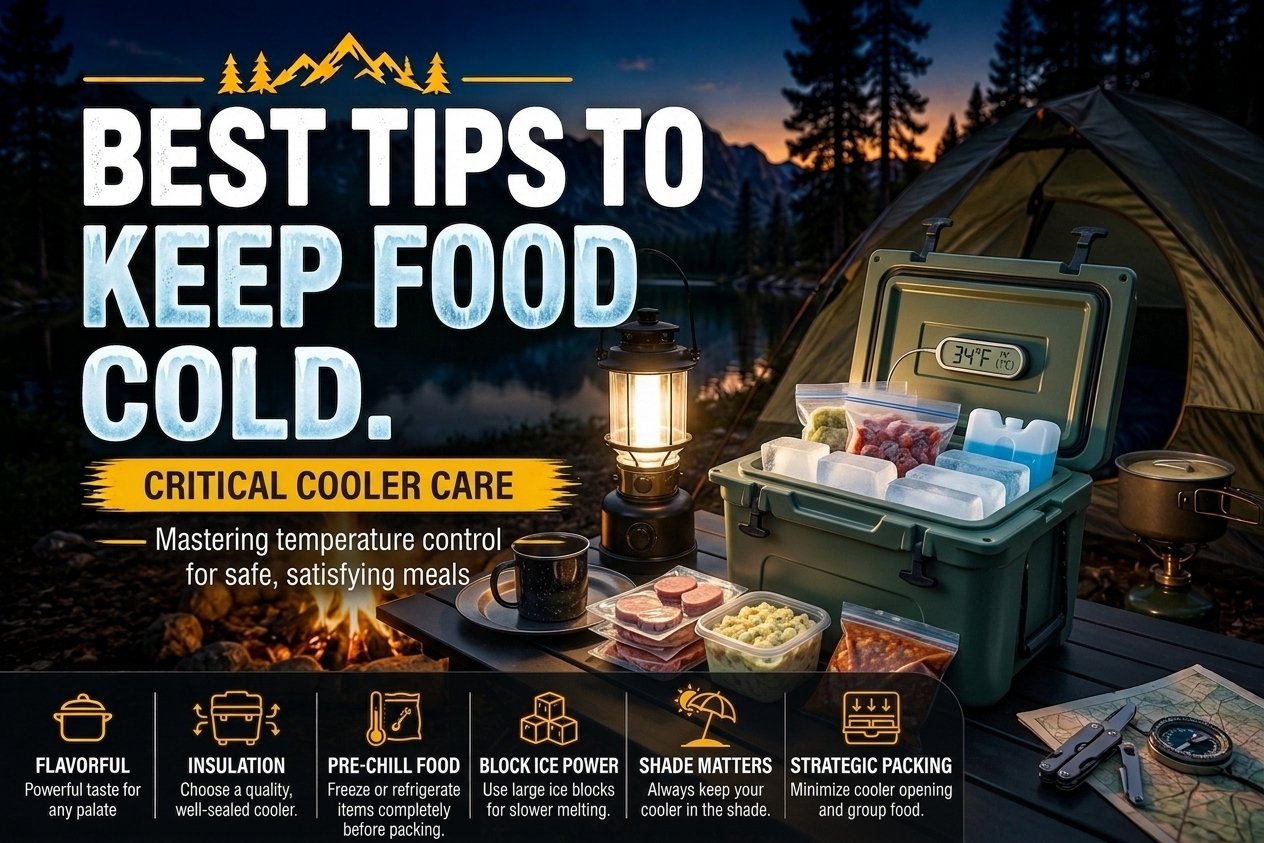
How to Keep Food Cold While Camping: 15 Easy Tips
Keeping food cold is one of the most important parts of planning a camping trip.
Unlike at home, you don’t have a refrigerator available at the campsite. That means you need to plan carefully to keep perishable foods and drinks cold throughout your trip.
Whether you’re going camping for one night, spending a weekend outdoors, or planning a longer adventure, knowing how to keep food cold while camping can help you protect your food, reduce waste, and enjoy your meals safely.
The good news is that you don’t need complicated equipment.
With a good cooler, plenty of ice, smart packing, and proper food storage, you can keep your camping food cold for much longer.
Quick Answer: The best way to keep food cold camping is to use a well-insulated cooler, pre-chill food and drinks, use plenty of ice or frozen ice packs, keep the cooler in the shade, minimize opening it, and separate drinks from perishable food. Keep perishable foods at 40°F (4°C) or below and follow recommended food-safety practices.
Why Is It Important to Keep Food Cold While Camping?
Many foods can spoil quickly when exposed to warm temperatures.
Foods such as:
- Meat
- Chicken
- Fish
- Eggs
- Dairy products
- Cooked meals
- Some prepared salads
need proper temperature control.
Keeping these foods cold helps slow bacterial growth and keeps your meals safer.
It’s especially important during summer camping when outdoor temperatures can rise quickly.
15 Best Ways to Keep Food Cold Camping
1. Use a High-Quality Cooler
A well-insulated cooler is the foundation of your camping food storage system.
When choosing a cooler, consider:
- Insulation quality
- Size
- Lid seal
- Durability
- Portability
- Ice retention
A larger cooler isn’t always better.
Choose a size appropriate for the amount of food you need to store.
2. Pre-Chill Your Food
One of the easiest mistakes campers make is putting warm food directly into the cooler.
Instead, refrigerate your food before packing it.
Whenever possible:
- Chill meat before packing.
- Refrigerate drinks.
- Cool prepared meals.
- Chill fruits and vegetables that require refrigeration.
Starting with cold food means your ice doesn’t have to work as hard.
3. Pre-Chill the Cooler
You can also cool the inside of the cooler before your trip.
Place ice packs or bags of ice inside for several hours before packing.
Then remove the temporary ice and replace it with fresh ice when you’re ready to leave.
This helps start the cooler at a lower temperature.
4. Use Plenty of Ice
Ice is your main cooling source.
Don’t be afraid to use plenty of it.
A cooler that’s mostly filled with food and only contains a small amount of ice may warm up much faster.
For longer trips, consider using larger blocks of ice because they generally melt more slowly than small cubes.
You can also combine block ice with smaller pieces to fill gaps.
5. Use Frozen Water Bottles
Frozen water bottles can be an excellent alternative to loose ice.
They can:
- Keep food cold
- Reduce mess
- Provide drinking water after they thaw
- Fill empty spaces inside the cooler
Freeze the bottles before your trip and place them around your food.
Make sure containers are suitable for freezing and leave enough room for expansion.
6. Pack the Cooler Correctly
How you organize your cooler matters.
A simple approach is:
Bottom: Ice or frozen bottles
Middle: Perishable food
Top: Items you’ll need first
Try to minimize empty space because cold air is easier to retain in a well-packed cooler.
However, don’t pack food so tightly that cold air and ice cannot surround it.
7. Separate Drinks From Food
If you’re camping with several people, you’ll probably open the cooler frequently to get drinks.
Every time you open the cooler, warm air enters.
Consider using:
Cooler 1
Food
Cooler 2
Drinks
This allows you to access drinks without repeatedly exposing your food to warm air.
For short trips, one cooler may be sufficient, but separate coolers can be useful for larger groups or longer trips.
8. Keep the Cooler in the Shade
Never leave your cooler sitting in direct sunlight if you can avoid it.
Place it:
- Under a shade structure
- Under a suitable tree
- Inside a shaded vehicle area when appropriate
- Under a table or other cover
Keeping the cooler away from direct sunlight can help reduce heat buildup.
Remember to choose a safe location where wildlife cannot easily access your food.
9. Keep the Cooler Closed
This sounds obvious, but it makes a huge difference.
Try to decide what you need before opening the cooler.
Instead of opening it several times, take everything you need at once.
Close the lid immediately after retrieving food.
10. Use Ice Packs for Smaller Containers
Reusable ice packs can be useful for smaller coolers and lunch-sized containers.
They’re particularly convenient for:
- Day trips
- Short camping trips
- Hiking lunches
- Individual food containers
For longer trips, combine reusable ice packs with other cooling methods as appropriate.
11. Store Food in Sealed Containers
Use leak-resistant containers or sealed bags to protect food.
This helps:
- Prevent leaks
- Keep food organized
- Reduce contamination
- Make the cooler easier to clean
It also prevents melting ice water from coming into unnecessary contact with food packaging.
12. Freeze Some Meals Before Your Trip
One clever way to keep food cold is to freeze meals before leaving home.
For example, you can freeze:
- Prepared sauces
- Some cooked meals
- Certain meat products
- Water bottles
As frozen food gradually thaws, it can help keep the cooler cold.
Always make sure the food is appropriate for freezing and thawing safely.
13. Use a Cooler Thermometer
You shouldn’t have to guess whether your cooler is cold enough.
A small food thermometer can help you monitor the temperature.
For perishable foods, the USDA recommends keeping them at 40°F (4°C) or below.
Checking the actual temperature is much more reliable than simply touching the cooler or guessing based on how much ice remains.
14. Keep Raw Meat Separate
Raw meat should be packaged carefully to prevent juices from contaminating other foods.
Place raw meat in:
- Leak-proof containers
- Sealed bags
- Separate sections of the cooler
Keep it away from ready-to-eat foods such as fruit, sandwiches, and snacks.
This is particularly important when packing chicken, beef, seafood, and other raw proteins.
15. Plan Your Meals Before the Trip
Meal planning can dramatically improve your cooler strategy.
Before leaving home, decide:
- What you’ll eat each day
- Which foods require refrigeration
- Which foods can remain at room temperature
- How much ice you’ll need
- When you’ll consume the most perishable foods
Try to eat the most perishable foods earlier in the trip.
How Long Does Food Stay Cold in a Cooler?
The answer depends on several factors:
- Cooler insulation
- Amount of ice
- Outdoor temperature
- Frequency of opening
- Amount of food
- Whether the cooler is kept in shade
- Starting temperature of the food
A high-quality cooler packed properly can retain cold temperatures much longer than a basic cooler.
However, don’t determine food safety based solely on how long the cooler “feels cold.”
Use a thermometer when possible.
How to Keep Food Cold Camping Without Electricity
You don’t need electricity to keep food cold.
A traditional ice cooler can work very well.
Use:
- A well-insulated cooler
- Frozen water bottles
- Ice packs
- Block ice
- Pre-chilled food
- Shade
- Proper packing
This is one of the simplest ways to manage food during camping.
How to Keep Food Cold Camping Without a Cooler
Camping without a cooler requires more planning.
The safest strategy is to rely primarily on foods that don’t require refrigeration.
Examples include:
- Nuts
- Trail mix
- Crackers
- Granola
- Dried fruit
- Peanut butter
- Some shelf-stable packaged foods
For perishable foods, don’t improvise storage methods that cannot maintain safe temperatures.
If you can’t reliably keep a perishable food at a safe temperature, choose a shelf-stable alternative.
How to Keep Drinks Cold While Camping
Drinks can consume a lot of cooler space.
A separate drink cooler can be useful.
Try these tips:
Freeze Water Bottles
They provide both cooling and drinking water after thawing.
Pre-Chill Drinks
Don’t put warm drinks into the cooler if you want them cold quickly.
Use a Separate Cooler
This reduces how often your food cooler is opened.
Keep It in the Shade
Avoid direct sunlight.
Best Foods for Camping That Don’t Need Refrigeration
Not every camping food needs to be kept cold.
Shelf-stable foods can make your trip easier.
Good options include:
- Oatmeal
- Nuts
- Trail mix
- Granola bars
- Crackers
- Peanut butter
- Dried fruit
- Canned foods
- Some packaged meals
This is especially useful for longer trips where cooler space is limited