
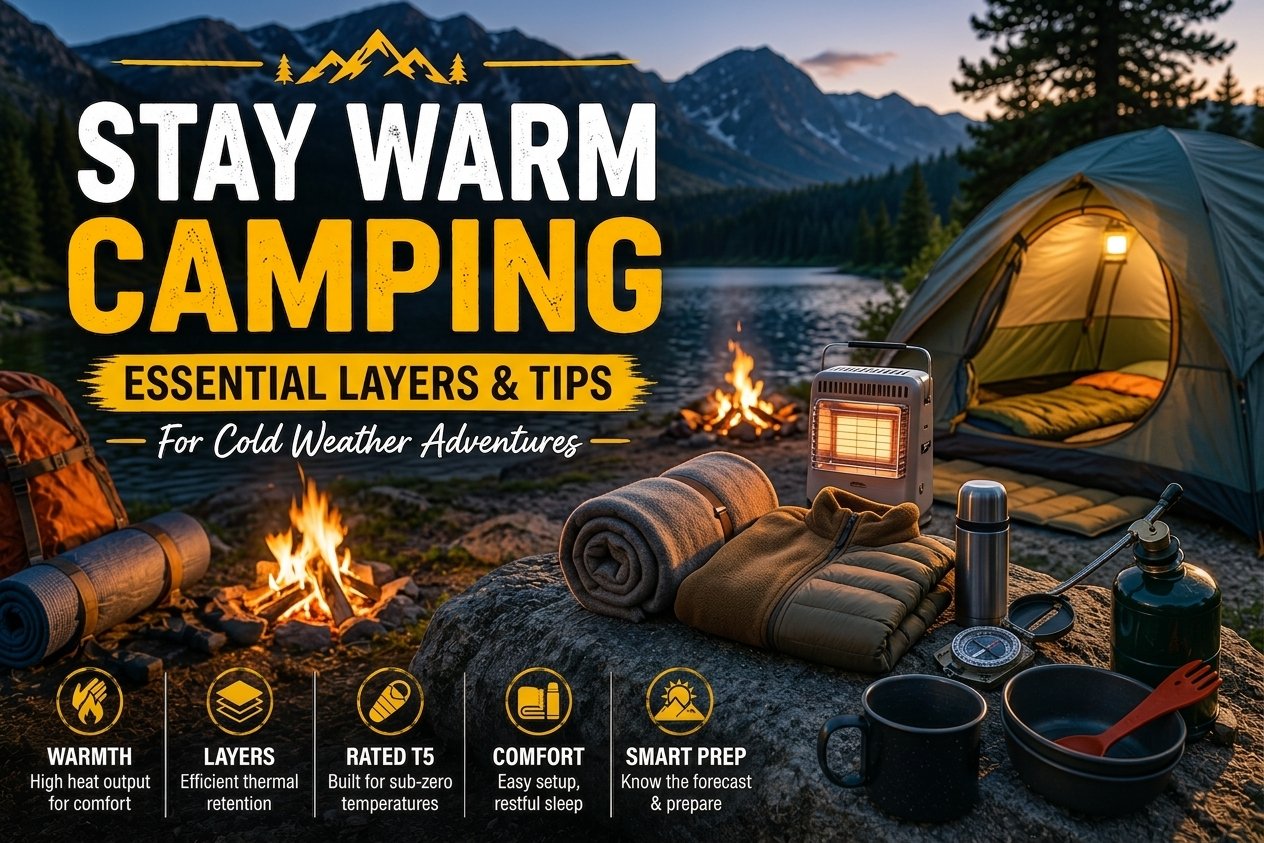
How to Stay Warm Camping: 15 Proven Tips for Cold Nights Outdoors
Camping in cold weather can be an incredible experience.
Crisp air, quiet surroundings, beautiful landscapes, and peaceful nights can make cold-weather camping very different from a summer camping trip.
But there’s one problem that can quickly ruin the experience:
Being cold.
Knowing how to stay warm camping isn’t just about wearing more clothes. Staying comfortable outdoors requires a combination of the right clothing, sleeping system, tent setup, insulation, food, and preparation.
The good news is that you don’t need an expensive winter camping setup to stay comfortable in moderately cold conditions.
In this guide, we’ll cover 15 practical ways to stay warm while camping, including what to wear, how to choose a sleeping bag, how to insulate yourself from the ground, and how to keep your tent warmer at night.
Quick Answer: To stay warm camping, dress in moisture-wicking layers, use a sleeping bag rated for the expected temperatures, insulate yourself from the ground with a suitable sleeping pad, wear a dry base layer at night, keep your sleeping bag dry, eat enough food, and protect yourself from wind and moisture.
Why Do You Get Cold While Camping?
Understanding why you get cold can help you prevent it.
When you’re outdoors, your body loses heat through several pathways.
Conduction
Heat can transfer from your body into the cold ground.
This is why your sleeping pad is extremely important.
Convection
Wind can carry warm air away from your body.
This is why a windy campsite can feel much colder than a sheltered location.
Evaporation
Sweat and moisture can cool your body.
Wearing wet clothing while camping can make you feel cold very quickly.
Radiation
Your body naturally loses heat to the surrounding environment, especially during cold nights.
The goal of a good camping setup is to minimize these sources of heat loss.
15 Best Ways to Stay Warm Camping
1. Dress in Layers
One of the most important rules for cold-weather camping is to use layers.
Instead of wearing one extremely thick jacket, use several layers that work together.
A basic layering system includes:
Base Layer
The base layer sits against your skin.
Its job is to manage moisture and keep you dry.
Synthetic fabrics and merino wool are popular choices.
Mid Layer
The mid layer provides insulation.
Examples include:
- Fleece
- Wool
- Synthetic insulation
- Down
Outer Layer
Your outer layer protects you from:
- Wind
- Rain
- Snow
- Moisture
This combination allows you to add or remove layers as your activity level changes.
2. Keep Your Clothes Dry
Wet clothing can make you extremely uncomfortable in cold weather.
Even if the temperature isn’t extremely low, moisture can significantly reduce your comfort.
Keep spare clothing in waterproof or water-resistant bags.
Pay particular attention to:
- Socks
- Base layers
- Gloves
- Hats
Save a completely dry set of clothing specifically for sleeping.
3. Choose the Right Sleeping Bag
Your sleeping bag is one of the most important pieces of equipment for staying warm.
When choosing a sleeping bag, consider its temperature rating.
Don’t choose a sleeping bag simply because its advertised rating matches the forecast.
It’s generally better to have some margin for colder conditions.
Also consider:
- Insulation type
- Bag shape
- Weight
- Packability
- Moisture resistance
For more information about choosing the right sleeping system, see our guide to Best Sleeping Bags.
4. Use a Good Sleeping Pad
Many beginners focus heavily on their sleeping bag and forget about the ground underneath them.
That’s a mistake.
The ground can draw heat away from your body.
A sleeping pad provides insulation between you and the cold ground.
When camping in colder conditions, pay attention to the pad’s R-value, which indicates its thermal resistance.
A suitable insulated sleeping pad can make a major difference in nighttime comfort.
5. Wear a Warm Hat
A warm hat is a simple way to improve comfort on cold nights.
Your head is exposed to the surrounding air, especially when you’re sitting around camp.
A warm hat can also be useful inside your tent if temperatures drop significantly.
Choose a comfortable hat that doesn’t make it difficult to sleep.
6. Keep Your Feet Warm
Cold feet can make it difficult to fall asleep.
Before getting into your sleeping bag:
- Change into dry socks.
- Make sure your feet are dry.
- Avoid wearing wet hiking socks.
- Use warm, comfortable sleeping socks.
Don’t wear extremely tight socks because they can restrict circulation.
7. Use a Hot Water Bottle
A hot water bottle can provide extra warmth inside your sleeping bag.
Fill a suitable leak-proof bottle with hot water and place it inside your sleeping bag before going to sleep.
Good locations include:
- Near your feet
- Against your torso
- Between your legs
Make sure the bottle is properly sealed to avoid leaks.
Never use boiling water if the bottle isn’t designed for it.
8. Eat a Proper Dinner
Your body needs energy to generate heat.
Going to bed hungry can make a cold night feel even worse.
Before sleeping, have a satisfying meal containing a combination of:
- Carbohydrates
- Protein
- Healthy fats
A warm meal can also make you feel more comfortable before getting into your sleeping bag.
For outdoor meal ideas, check out our Camping Dinner Recipes guide.
9. Drink Something Warm
A warm drink can be comforting on a cold evening.
Good options include:
- Herbal tea
- Hot chocolate
- Warm water
- Broth
However, don’t rely on alcohol to warm yourself.
Alcohol can increase heat loss and impair your ability to recognize dangerous cold exposure.
10. Choose Your Campsite Carefully
Where you place your tent can affect how warm you feel.
Look for a location that offers protection from:
- Strong wind
- Excessive moisture
- Standing water
Natural wind protection can make your campsite more comfortable.
At the same time, avoid areas that could be exposed to hazards such as falling branches, flooding, or avalanches.
11. Protect Yourself From Wind
Wind can make cold conditions feel significantly harsher.
Your tent’s rainfly and outer shell can provide an important barrier against wind and weather.
When choosing a tent for colder conditions, consider its:
- Weather protection
- Ventilation
- Stability
- Season rating
For general tent selection, check our guide to Best Camping Tents.
12. Don’t Go to Bed Wearing Wet Clothes
This is one of the most important cold-weather camping rules.
After hiking or setting up camp, you may have sweaty clothing.
Don’t simply crawl into your sleeping bag wearing those clothes.
Instead:
- Remove damp clothing.
- Dry yourself.
- Put on your dry sleeping clothes.
- Get into your sleeping bag.
Keeping a dedicated sleeping outfit can make a surprisingly big difference.
13. Stay Dry Inside Your Tent
Moisture can accumulate inside a tent through condensation.
Although it may seem counterintuitive, proper ventilation is important.
Use your tent’s ventilation features to allow moisture to escape.
Avoid completely sealing the tent unless conditions require it.
A well-ventilated tent can help reduce condensation and keep your sleeping environment more comfortable.
14. Use a Sleeping Bag Liner
A sleeping bag liner can add another layer between your body and the cold environment.
Depending on the type, a liner can:
- Add some warmth
- Keep your sleeping bag cleaner
- Improve comfort
- Extend the versatility of your sleeping bag
However, a liner should be considered an additional layer rather than a replacement for a properly rated sleeping bag.
15. Keep Your Head and Hands Protected
Cold hands can make setting up camp and cooking much harder.
Carry appropriate gloves or mittens for the expected conditions.
A useful strategy is to have:
- One pair for daytime activities
- A dry pair reserved for evening or sleeping
Keeping backup gloves dry can be extremely useful if your first pair gets wet.
How to Stay Warm in a Tent
Your tent isn’t designed to work like a heater.
Instead, it primarily protects you from the elements.
To stay warmer inside your tent:
Use an Appropriate Sleeping Bag
Choose one suitable for the expected conditions.
Insulate From the Ground
Use a suitable sleeping pad.
Keep Yourself Dry
Change out of sweaty or wet clothing.
Reduce Drafts
Use the tent’s doors and vestibules appropriately.
Maintain Ventilation
Allow moisture to escape to reduce condensation.
How to Stay Warm While Sleeping Camping
If you’re struggling to sleep because you’re cold, check your sleeping system.
A good setup should include:
Dry base layer → Insulated sleeping bag → Insulated sleeping pad → Appropriate tent
You can also add:
- Warm socks
- Hat
- Sleeping bag liner
- Hot water bottle
The key is to insulate both above and below you.
What to Wear Camping in Cold Weather
A simple cold-weather clothing system could include:
Upper Body
- Moisture-wicking base layer
- Fleece or insulated mid-layer
- Weather-resistant outer layer
Lower Body
- Base layer
- Warm trousers
- Weather-resistant outer layer when needed
Extremities
- Warm socks
- Gloves or mittens
- Warm hat
Avoid cotton as your primary base layer in cold and wet conditions because it can hold moisture and dry slowly