
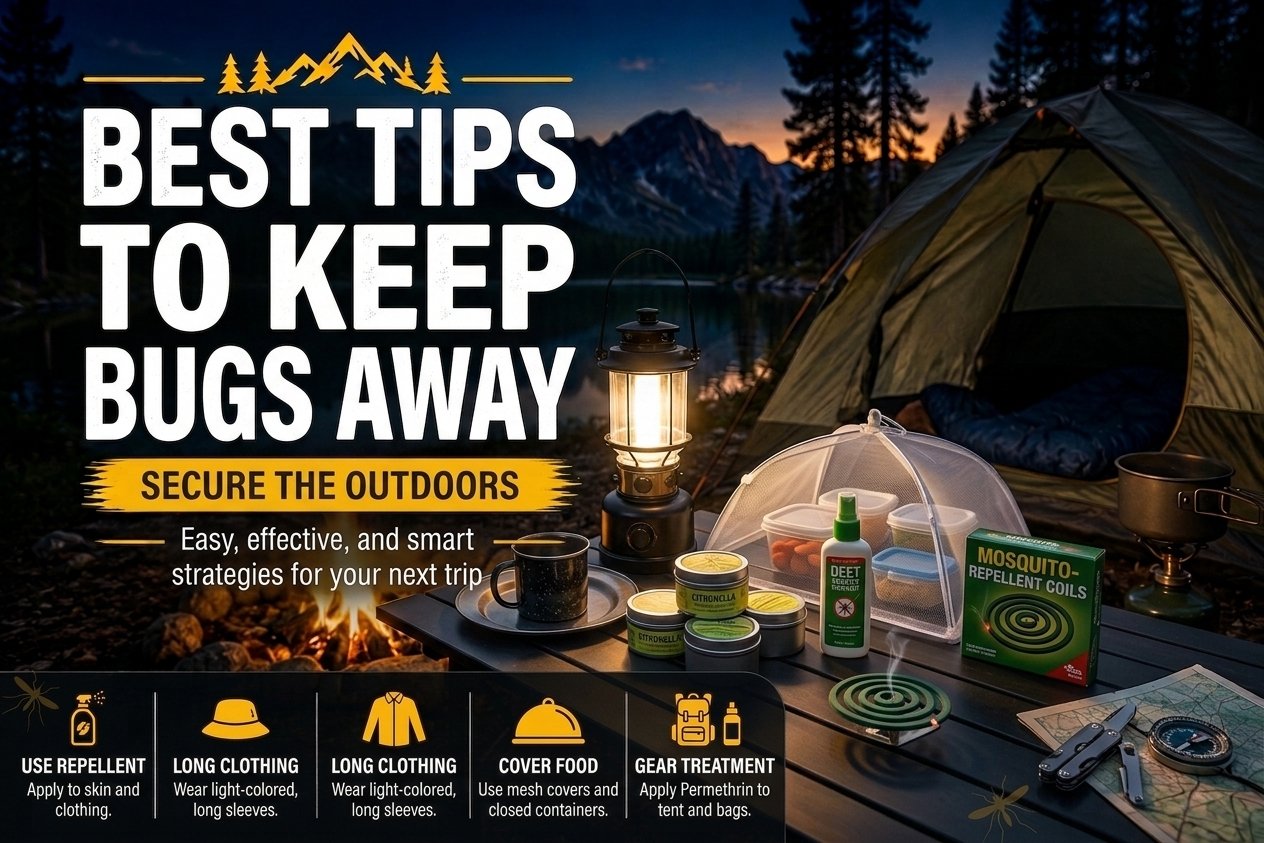
How to Keep Bugs Away While Camping: 15 Easy Tips
Camping gives you the opportunity to escape the city and enjoy nature.
Unfortunately, nature also comes with something many campers would rather avoid:
Bugs.
Mosquitoes, flies, ants, ticks, and other insects can quickly turn a relaxing camping trip into an uncomfortable experience.
The good news is that you don’t have to spend your entire trip swatting insects.
With the right campsite, food storage, clothing, tent habits, and insect protection, you can significantly reduce the number of bugs around your campsite.
In this guide, you’ll learn how to keep bugs away while camping with 15 practical tips that are easy to follow.
Quick Answer: To keep bugs away camping, choose your campsite carefully, keep food and trash sealed, clean up spills immediately, keep your tent closed, use appropriate insect repellent, wear protective clothing, and remove standing water around your campsite.
Why Are Bugs Attracted to Campsites?
Before learning how to keep bugs away, it helps to understand why they show up.
Insects can be attracted by:
- Food
- Sweet drinks
- Garbage
- Standing water
- Body odor and sweat
- Bright lights
- Moisture
- Open food containers
A campsite can provide many of these things.
That’s why good campsite hygiene is one of the most effective ways to reduce insects.
15 Best Ways to Keep Bugs Away Camping
1. Choose Your Campsite Carefully
Your campsite location can make a huge difference.
Avoid areas that are:
- Extremely wet
- Surrounded by dense vegetation
- Close to standing water
- Near obvious insect activity
Mosquitoes are commonly associated with areas containing standing water, while other insects may be more common in dense vegetation.
Choose a dry, open, well-maintained camping area when possible.
2. Keep Your Tent Closed
One of the simplest ways to prevent bugs from bothering you is to keep them outside in the first place.
Don’t leave your tent door open unnecessarily.
When entering or leaving:
- Open the door.
- Enter quickly.
- Close it immediately.
Always make sure zippers are fully closed.
A small gap can be enough for insects to get inside.
3. Use a Tent With Good Mesh
A tent with fine mesh panels allows airflow while helping keep insects outside.
Mesh is particularly useful during warm weather when you want ventilation without leaving the tent completely open.
Before your trip, inspect the mesh for:
- Holes
- Tears
- Broken zippers
- Loose seams
Repair small openings before heading outdoors.
4. Use Insect Repellent
Insect repellent can provide another layer of protection.
Depending on the situation, products containing active ingredients such as DEET, picaridin, IR3535, oil of lemon eucalyptus (OLE), or PMD may help repel mosquitoes and other biting insects.
Always follow the product label instructions, including age restrictions and application directions.
For areas where ticks are a concern, use appropriate protection and check your body and clothing after outdoor activities.
5. Wear Long Sleeves and Pants
Clothing can provide a physical barrier against insects.
When bugs are particularly active, consider wearing:
- Long-sleeve shirts
- Long pants
- Socks
- Closed shoes
Light-colored clothing can also make it easier to spot ticks.
For additional protection, tuck pants into socks when hiking in areas where ticks are common.
6. Keep Food Sealed
Food is one of the biggest reasons insects gather around campsites.
Don’t leave food:
- Open on a table
- Inside uncovered containers
- On the ground
- Outside overnight
Use sealed containers or appropriate food-storage bags.
After eating, clean everything immediately.
7. Clean Up Food and Drink Spills
Even a small amount of spilled juice or soda can attract insects.
Clean up immediately after:
- Cooking
- Eating
- Drinking
- Preparing food
Pay particular attention to sweet drinks and sticky foods.
A clean campsite is generally a less attractive campsite for many insects.
8. Manage Your Trash Properly
Garbage can quickly become an insect magnet.
Keep trash inside sealed bags or suitable containers.
Don’t allow garbage to accumulate around your campsite.
Before leaving:
- Collect all trash.
- Check the ground for food scraps.
- Dispose of waste according to campsite rules.
Remember that food waste can also attract wildlife.
9. Avoid Leaving Dirty Dishes Overnight
Dirty plates, cups, and cooking equipment can attract bugs.
Wash or clean your dishes after meals.
Don’t leave:
- Greasy pans
- Food-covered plates
- Sweet drink containers
- Food scraps
sitting around your campsite.
If you’re unable to wash immediately, seal dirty items appropriately and clean them as soon as practical.
10. Reduce Standing Water
Standing water can create breeding opportunities for mosquitoes.
Look around your campsite for unnecessary containers holding water, such as:
- Buckets
- Open bottles
- Containers
- Tarps that collect water
Don’t disturb natural water sources, but eliminate unnecessary artificial water collection around your own campsite.
11. Be Careful With Camping Lights
Some insects are attracted to light.
If you’re sitting outside at night, avoid unnecessarily illuminating the entire campsite.
Instead:
- Use a focused light.
- Turn lights off when they’re not needed.
- Keep bright lights away from tent entrances when practical.
A headlamp can be useful because you can direct the light exactly where you need it.
12. Keep Your Campsite Clean
A clean campsite is one of your best defenses against unwanted insects.
After every meal:
Cook → Eat → Clean → Store → Dispose of trash
Don’t let food scraps remain on tables or around the fire area.
This simple routine can make a significant difference.
13. Use a Camping Screen Shelter
If you’re camping in an area with many mosquitoes or flies, a screened shelter can provide additional protection.
A screen room can give you a comfortable place to:
- Eat
- Cook
- Relax
- Play games
while keeping many flying insects outside.
14. Check Your Gear Before Bed
Before getting into your tent, check your clothing and equipment.
Shake out:
- Shoes
- Jackets
- Blankets
- Sleeping bags
Don’t leave shoes outside with their openings exposed for long periods.
A quick inspection can prevent unwanted surprises inside your tent.
15. Check Yourself for Ticks
If you’re camping or hiking in an area where ticks are present, perform a tick check after spending time outdoors.
Pay attention to areas such as:
- Hairline
- Behind the ears
- Neck
- Armpits
- Waist
- Groin
- Behind the knees
- Around the ankles
Check your clothing and gear as well.
Early detection makes it easier to remove an attached tick promptly.
How to Keep Mosquitoes Away Camping
Mosquitoes are among the most annoying insects you’ll encounter outdoors.
To reduce mosquito problems:
Choose a Dry Campsite
Avoid camping immediately next to standing water when possible.
Use Repellent
Apply an appropriate insect repellent according to its label.
Cover Exposed Skin
Wear long sleeves and pants when mosquitoes are active.
Keep Your Tent Closed
Use the tent’s mesh rather than leaving doors open.
Avoid Peak Mosquito Activity
Mosquito activity varies by species and location, but many mosquitoes are particularly active around dawn and dusk.
Plan accordingly.
How to Keep Flies Away Camping
Flies are often attracted to food and garbage.
To reduce them:
- Keep food covered.
- Clean tables after eating.
- Dispose of garbage properly.
- Wash dishes promptly.
- Keep sweet drinks sealed.
- Avoid leaving meat exposed.
A clean cooking area is one of the best ways to reduce flies.
How to Keep Ants Away Camping
Ants can quickly discover even tiny food leftovers.
To reduce ants around your campsite:
- Keep food sealed.
- Clean crumbs immediately.
- Don’t leave sugary drinks uncovered.
- Keep food containers off the ground when appropriate.
- Clean your cooking area after every meal.
Avoid placing food directly next to ant trails.
How to Keep Bugs Out of Your Tent
Your tent should be your bug-free zone.
Follow these simple rules:
Keep Doors Closed
Don’t leave the entrance open.
Check Mesh
Repair holes before your trip.
Store Food Properly
Avoid keeping food inside your sleeping area unless necessary and permitted by local campsite rules.
Check Clothing
Inspect clothing and gear before bringing them into the tent.
Use a Proper Sleeping Setup
A suitable sleeping bag and sleeping pad can improve comfort while keeping you covered.
Natural Ways to Reduce Bugs Around Your Campsite
Many campers search for natural ways to keep insects away.
Some common approaches include:
- Choosing a dry campsite
- Keeping food sealed
- Maintaining good campsite hygiene
- Wearing protective clothing
- Using physical barriers such as screens
- Removing unnecessary standing water
- Limiting unnecessary lighting
Be cautious with homemade repellents and essential oils. Their effectiveness can vary, and they should not automatically be considered a replacement for proven insect repellents.
What Not to Do When Trying to Keep Bugs Away
Some camping habits can actually make the problem worse.
Avoid:
Leaving Food Uncovered
This can attract flies, ants, and other insects.
Leaving Trash Outside
Garbage can attract insects and wildlife.
Leaving Tent Doors Open
You’re essentially inviting bugs inside.
Camping Directly Beside Standing Water
This can increase mosquito exposure.
Using Unproven DIY Repellents as Your Only Protection
If you’re in an area with significant mosquito- or tick-borne disease risk, use proven protection methods